
Introduction: Why MotoGP Gear Matters to You
If you’ve ever watched a MotoGP race, you’ve seen riders lean into corners at impossible angles, traveling at speeds over 220 mph, all while wearing leather suits that look like a second skin. You might wonder: What is that MotoGP rider gear made of? Why does it look so different from a regular leather jacket? And most importantly—can you wear something similar, and should you?
Understanding what MotoGP riders wear and why they wear it will help you make smarter choices when shopping for your own leather apparel. Whether you’re a motorcycle enthusiast, a casual rider, or someone who simply loves the aesthetic of professional racing leather, this guide breaks down the real reasons behind every design choice. What MotoGP riders wear isn’t just about style—it’s about protection, performance, and decades of engineering. By learning what professionals choose, you can select leather gear that matches your actual needs and riding style.
What Is MotoGP Racing Leather?
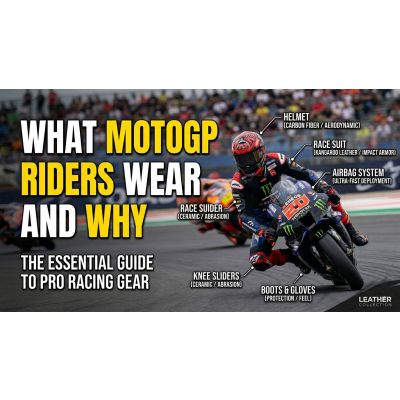
MotoGP leather isn’t just a thicker version of a regular motorcycle jacket. It’s a complete protective system engineered to protect professional racers traveling at extreme speeds while maintaining the agility and freedom of movement needed for competitive riding. A MotoGP one-piece or two-piece leather suit is custom-fitted to each rider’s body, with reinforced panels in high-impact zones and strategic ventilation to manage heat during intense performance.
Professional racing leather combines multiple materials—premium hides, mesh panels, armor inserts, and sometimes even carbon fiber protectors—all working together. The construction is typically thicker and heavier than street leather, with seams reinforced specifically for crash protection rather than everyday comfort.
Most MotoGP teams work with specialized leather manufacturers who create replica suits for fans and enthusiasts. These replicas maintain the design and protective qualities of professional gear but are often made available in standard sizing and more affordable price points than custom professional suits.
The Layers: How MotoGP Suits Protect Riders
A professional MotoGP leather suit typically has multiple protective layers, each serving a specific purpose:
Outer Leather Shell
The outermost layer is high-grade leather, usually cowhide or a specialized racing leather blend. This layer resists abrasion during a crash and provides the structural integrity of the suit. MotoGP suits often use leather that is thicker and more densely tanned than fashion leather, sometimes reaching 1.4mm to 1.8mm thickness in critical areas.
Impact-Resistant Panels
Underneath the leather, reinforced panels are strategically placed on the shoulders, elbows, hips, and knees—the areas most likely to contact the track during a slide. These panels may be made from thicker leather, Cordura, or kevlar-like materials designed to slow down abrasion and distribute impact forces across a larger area.
Armor and Protective Inserts
Professional MotoGP riders wear CE-certified armor inserts in strategic locations. These are rigid or semi-rigid materials that protect bones and joints. Shoulder armor, elbow protection, knee guards, and hip protectors are either built into the suit or designed to accept removable armor pieces.
Lining and Interior Comfort Layer
The interior of a MotoGP suit typically features a moisture-wicking lining to manage sweat during high-intensity riding. Many professional suits use breathable mesh or perforated leather panels in the underarms, back, and inner thighs to allow airflow while maintaining protection.
Materials Used in Professional Racing Gear
Cowhide: The Standard for Racing
Most professional racing leather is cowhide because it offers the best balance of durability, abrasion resistance, and cost. Cowhide is naturally tough and weathers crashes better than softer leathers. It also breaks in over time while maintaining its protective qualities.
Lambskin: For Premium Comfort
Some high-end racing suits blend cowhide with lambskin in areas where comfort is prioritized—like the chest area or inner thighs. Lambskin is softer and more pliable, allowing for better movement while still providing decent abrasion resistance when properly treated.
Kangaroo and Exotic Leathers
A small number of premium racing suits use kangaroo leather, which is exceptionally strong and lightweight. It’s more expensive but offers superior tear resistance and flexibility. Some manufacturers also experiment with buffalo leather and other hides.
Synthetic and Mesh Components
Modern MotoGP suits often combine leather with mesh panels made from nylon, polyester, or Cordura. These materials provide ventilation and reduce weight while maintaining protection in less critical impact zones. The combination approach gives riders the best of both worlds: protection where it matters most and breathability where possible.
Fit and Design: Why MotoGP Suits Look Different
If you’ve noticed that MotoGP suits look different from street motorcycle jackets, you’re observing real functional differences:
Aggressive Forward Lean Design
MotoGP suits are cut with a forward-lean design. When you put on a professional racing suit and assume a riding position, the suit should fit snugly against your body with zero bunching or excess fabric. This design accounts for the rider’s body position when leaned into a corner at 60+ degree angles. The shoulders are higher, the arms are forward, and the waist is tighter than street gear.
Strategic Seam Placement
Every seam on a racing suit is placed to avoid high-impact zones and high-movement areas. You won’t find seams running down the middle of the shoulder or across the elbow joint—these are places where you’re most likely to slide on the track. Instead, seams are positioned to the sides or in low-stress areas.
Knee Sliders
Professional MotoGP suits include knee slider pads on the outside of the knees. These replaceable or reinforced sections are designed to touch down during hard cornering and take the initial friction of a slide. Street motorcyclists don’t use knee sliders because they don’t lean their bikes nearly as far over.
Hump Back Design
Many racing suits have a built-up “hump” or reinforced section on the upper back. This serves as additional protection and also helps position the rider’s spine in the optimal forward-lean posture. On street gear, you won’t find this feature because riders sit more upright.
Suit Connectivity
Professional one-piece suits feature zippers that connect the jacket to the pants, ensuring the entire suit stays in place during a high-speed crash. This connectivity is crucial for racing but less necessary for street riding.
Modern Technology in Racing Leather
Airbag Integration
Some of the most advanced MotoGP suits now incorporate wearable airbag technology. These systems detect a fall or sudden loss of lean angle and inflate protective airbags around the chest, back, and shoulders within milliseconds. This technology adds another layer of protection beyond the leather and armor.
CE Certification and Safety Standards
Professional racing suits are engineered to exceed CE safety standards, which test abrasion resistance, seam strength, and impact protection. Look for EN 13595 certification, which specifically tests motorcycle protective clothing. Professional suits often exceed these minimums.
Ventilation Systems
Modern racing suits include perforated leather sections, mesh gussets, and strategic ventilation to allow airflow without compromising protection. Some premium suits even feature removable underarm panels for summer riding.
Ergonomic Design Improvements
Contemporary MotoGP suits use CAD design and wind-tunnel testing to reduce drag while maintaining protection. Every panel, every curve, and every seam is optimized for aerodynamics and comfort during extreme performance.
Street Gear vs. Track Gear: Key Differences
| Feature | MotoGP Track Suit | Street Motorcycle Gear |
|---|---|---|
| Fit | Aggressive forward-lean, snug fit, racing posture | Upright or moderate lean, comfortable for everyday riding |
| Leather Thickness | 1.4–1.8mm, reinforced panels | 0.8–1.2mm, balanced protection and comfort |
| Armor Location | Multiple impact zones, specialized placement | Shoulders, elbows, back—standard placement |
| Knee Sliders | Yes, replaceable pads | Rarely, not needed for street riding |
| Ventilation | Optimized for high-speed airflow | Balanced protection and breathing |
| Jacket-Pants Connection | Connected one-piece or zip-together two-piece | Often separate, some two-piece options |
| Price Range | $1,200–$3,000+ (professional grade) | $400–$1,500 (quality street gear) |
| Everyday Wearability | Specialized, best for track use | More versatile, suitable for commuting |
Choosing the Right Leather for Your Riding Style
If You’re a Professional or Track Day Rider
You should look for genuine MotoGP replica suits or professional racing leather from established manufacturers. Focus on CE certification, reinforced seams, and armor integration. Custom-fitted suits offer the best protection because they’ll fit your body perfectly during your specific riding position. A track-focused suit should have knee sliders, hump back design, and one-piece or connected two-piece construction.
If You’re a Regular Commuter or Casual Rider
You don’t need a full racing suit. Instead, look for a quality leather motorcycle jacket or two-piece leather set designed for street riding. Street gear should be comfortable for everyday wear while still offering solid protection. Focus on fit, lining quality, and reasonable armor placement. You want leather that works for your upright riding position, not an aggressive racing posture.
If You Ride Hard but on the Street
You’re in a middle ground. Consider a high-quality leather motorcycle jacket with reinforced panels and good armor placement. Some manufacturers now make “sport-touring” leather that borrows design cues from racing gear—like thicker leather and strategic reinforcement—while maintaining a more wearable fit for street riding.
If You’re a Collector or Enthusiast
MotoGP replica suits are perfect for you. These officially licensed suits replicate the designs and colors of professional teams and riders while being available in standard sizing. You get authentic racing leather engineering at a more accessible price point than fully custom professional gear. Browse our MotoGP replica suits and professional motorcycle gear to see styles from your favorite teams.
Custom Sizing and Made-to-Measure Options
One of the biggest advantages of choosing professional racing leather is the option for custom sizing. Unlike off-the-rack street jackets, racing suits can be made-to-measure based on your exact body measurements.
When Custom Sizing Is Worth It
If you’re taller than 6’2″, shorter than 5’4″, have an athletic build, or don’t fit standard sizing charts, custom sizing is genuinely worth the investment. A perfectly fitted racing suit will protect you better and feel more comfortable than a generic size that’s slightly off. Professional racers always wear custom suits because a poor fit compromises both protection and performance.
What Gets Measured
Custom suits typically require measurements of your neck, chest, waist, hips, sleeve length, torso length, and inseam. Some manufacturers also take postural measurements—they’ll measure you in your actual riding position to ensure the suit fits correctly when you’re leaned forward on the bike.
Production Timeline and Cost
Made-to-measure racing leather typically takes 6–12 weeks to produce and costs more than standard sizing—usually $1,500–$3,500+ for genuine MotoGP-grade gear. However, the investment pays off through better protection, longer lifespan, and significantly improved comfort. Many riders find that a perfectly fitted suit lasts longer because it doesn’t wrinkle or bunch in ways that weaken seams.
If you’re interested in custom options, explore our made-to-measure leather services to discuss sizing, material choices, and delivery timelines with our specialists.
Common Mistakes When Buying Racing Leather
Mistake #1: Choosing Fit Based on Fashion, Not Function
Buying a racing suit one size too large “for comfort” defeats the entire purpose. Racing leather should fit snugly. If you’re uncomfortable trying it on while standing upright, try it while in a riding position. What feels tight standing up will feel right when you’re leaned forward on the bike. Many buyers regret oversized purchases.
Mistake #2: Ignoring Leather Quality Differences
Not all cowhide is the same. Racing leather is typically top-grain, full-grain hide that’s been specially tanned for abrasion resistance. Cheaper leather is often split-hide or corrected-grain, which won’t protect you the same way in a crash. Always ask about leather grade and thickness before buying.
Mistake #3: Buying Based on Price Alone
Extremely cheap racing suits—under $300–400—are often made from lower-quality leather and synthetic materials. They may look like racing gear, but they won’t provide the same protection. Professional-grade racing leather costs more because the materials, construction, and engineering demand it. Budget at least $600–800 for entry-level quality racing leather and $1,200+ for premium suits.
Mistake #4: Forgetting About Armor Compatibility
Some racing suits come with armor; others are designed to accept removable armor pieces. Before buying, confirm whether the suit includes armor and whether you can upgrade or customize armor inserts later. This flexibility matters if you want to adjust protection levels for different riding conditions.
Mistake #5: Not Considering Your Actual Riding Style
Buyers sometimes purchase professional racing suits when they only do street commuting. Then they end up with gear that’s uncomfortable for their actual use. Be honest about whether you really need professional racing protection or if a high-quality street motorcycle jacket would serve you better.
Mistake #6: Skipping Seam and Stitch Inspection
Examine seams closely. Professional racing leather should have reinforced stitching, sometimes double-stitched or triple-stitched in critical areas. Poor seam quality is one of the biggest signs of low-quality racing gear. Run your finger along seams and look for even, tight stitching with no loose threads.
Care and Maintenance of Racing Leather
Professional racing leather requires specific care to maintain its protective qualities over time.
After Every Ride
Wipe down your suit with a soft, dry cloth to remove dust and moisture. Don’t hang racing leather in direct sunlight, which can fade color and dry out the hide. Store it in a cool, dry place away from heat sources.
Monthly Maintenance
Use a leather conditioner designed for motorcycle gear every 4–6 weeks. This keeps the leather supple and prevents cracks that can weaken the protective barrier. Never use household furniture polish or products not designed for gear leather.
Armor Care
Check armor inserts regularly to ensure they’re still properly positioned and haven’t compressed unevenly. Removable armor can often be hand-washed and air-dried. Built-in armor should never be submerged in water; spot-clean as needed.
After a Crash or Slide
Inspect the suit carefully for damage. Surface scuffs may be cosmetic, but deep gouges in the leather or compromised seams mean the suit should be professionally repaired or, in severe cases, replaced. Don’t ride in damaged protective gear, as its protective integrity is compromised.
Professional Cleaning and Repair
Once or twice a year, consider professional cleaning from a specialist who understands motorcycle leather care. They can deep-clean the lining, condition the leather properly, and address any seam separation before it becomes a major issue.
Buyer’s Checklist: Before You Buy Racing Leather
Use this checklist to evaluate racing leather before making your purchase:
- Leather Quality: Is it top-grain or full-grain cowhide? What’s the thickness (1.2mm+)?
- Seam Construction: Are seams reinforced, double-stitched, or triple-stitched? Are stitches tight and even?
- Fit for Your Riding Position: Does it fit snugly in your normal riding posture? (Not when standing upright)
- Armor and Protection: Is armor included? Is it CE-certified? Can you upgrade or customize it?
- Strategic Reinforcement: Are there reinforced panels on shoulders, elbows, hips, and knees?
- Knee Sliders (if racing): Are they included and replaceable?
- Connectivity Options: If you want separate jacket and pants, do they zip together?
- Ventilation: Are there mesh panels or perforations in high-heat areas?
- Safety Certification: Does it meet EN 13595 or comparable standards?
- Lining Quality: Is the interior breathable and moisture-wicking?
- Brand Reputation: Is it from an established motorcycle gear manufacturer with good reviews?
- Warranty and Returns: What’s the return policy if the fit isn’t right? Is there a warranty?
- Care Instructions: Are maintenance and cleaning instructions clear and included?
- Budget Reality: Are you spending enough to get genuine quality ($600+ minimum)?
- Actual Use Case: Does this suit match your real riding style and needs?
Conclusion: Making Your MotoGP Leather Choice
Understanding what MotoGP riders wear and why they wear it gives you the knowledge to make smart decisions when choosing your own leather apparel. Professional racing gear isn’t just expensive fashion—it’s engineered protection backed by decades of motorsport innovation. From leather thickness to seam placement to armor integration, every detail on a MotoGP suit serves a purpose.
Whether you’re buying professional track-focused gear, a MotoGP replica suit, or high-quality street motorcycle leather, the principles remain the same: prioritize genuine leather quality, fit your body correctly, choose reinforcement in the right places, and select gear that matches your actual riding style. Cheap racing leather won’t protect you like professional-grade material, but you don’t necessarily need a full Custom Race Suits if you’re a street rider.
Take time to measure yourself correctly, understand the differences between track and street gear, and inspect craftsmanship carefully. A well-chosen leather suit will last years and provide genuine protection when it matters most. The investment in quality racing leather is an investment in both safety and longevity.
Ready to find your ideal racing suit or motorcycle leather gear? Start by understanding your actual riding style, your budget, and your body measurements. Then compare options based on leather quality, fit, protection features, and reviews from other riders. When you find the right piece, you’ll know it—because it will look and feel like gear made for exactly what you do.
Frequently Asked Questions
Can I wear a MotoGP racing suit for street riding?
Technically yes, but it’s not ideal. MotoGP suits are designed for aggressive riding positions and high speeds on controlled tracks. The fit is aggressive, with elevated shoulders and forward-lean tailoring that feels uncomfortable when you’re sitting upright in traffic. Street motorcycle jackets offer better wearability for commuting while still providing solid protection. However, if you do track days regularly, a racing suit makes sense as your primary gear. Many riders own both—a street jacket for everyday use and a racing suit for the track.
What’s the difference between a one-piece and two-piece racing suit?
A one-piece suit is a single connected garment with jacket and pants sewn together. This provides maximum protection during a crash because the suit can’t separate or ride up. Professional racers prefer one-piece because of this security. A two-piece racing suit has separate jacket and pants that zip together at the waist. Two-piece suits offer more flexibility for everyday wear and are easier to put on and take off. Both can provide professional-level protection if properly engineered; the main difference is convenience and security during an accident.
Is cowhide really better than lambskin for racing?
For pure abrasion resistance and crash protection, yes—cowhide is superior. It’s thicker, tougher, and better at resisting road rash during slides. Lambskin is softer and more comfortable but offers less protective durability. Many premium racing suits blend both: cowhide in high-impact areas (shoulders, elbows, hips, and knees) and lambskin or softer panels in comfort areas (chest, inner arms, and inner thighs). This hybrid approach gives you the best of both. For professional racing, pure cowhide is the standard.
Do I really need custom-sized racing leather?
If you fit standard sizing reasonably well, a high-quality stock size can work. However, custom sizing provides better protection and comfort if you’re significantly larger or smaller or have an athletic build that doesn’t fit typical measurements. Professional racers always wear custom suits because a poor fit compromises both protection (armor doesn’t align with your joints) and performance (uncomfortable seams affect concentration). If you’re serious about track riding or own multiple racing suits, at least one should be custom-fitted.
How much should I spend on genuine MotoGP racing leather?
Expect to spend a minimum of $600–800 for entry-level genuine racing leather and $1,200–3,000+ for professional-grade suits. Anything significantly cheaper is likely synthetic or lower-quality leather that won’t protect you properly. The price reflects material cost (quality leather is expensive), engineering, handmade construction, and safety features. Think of it as long-term protection rather than just clothing. Quality racing leather lasts years when properly maintained and will protect you far better in a crash than cheaper alternatives. Invest what you can reasonably afford, but don’t compromise on material quality to save a few dollars.